
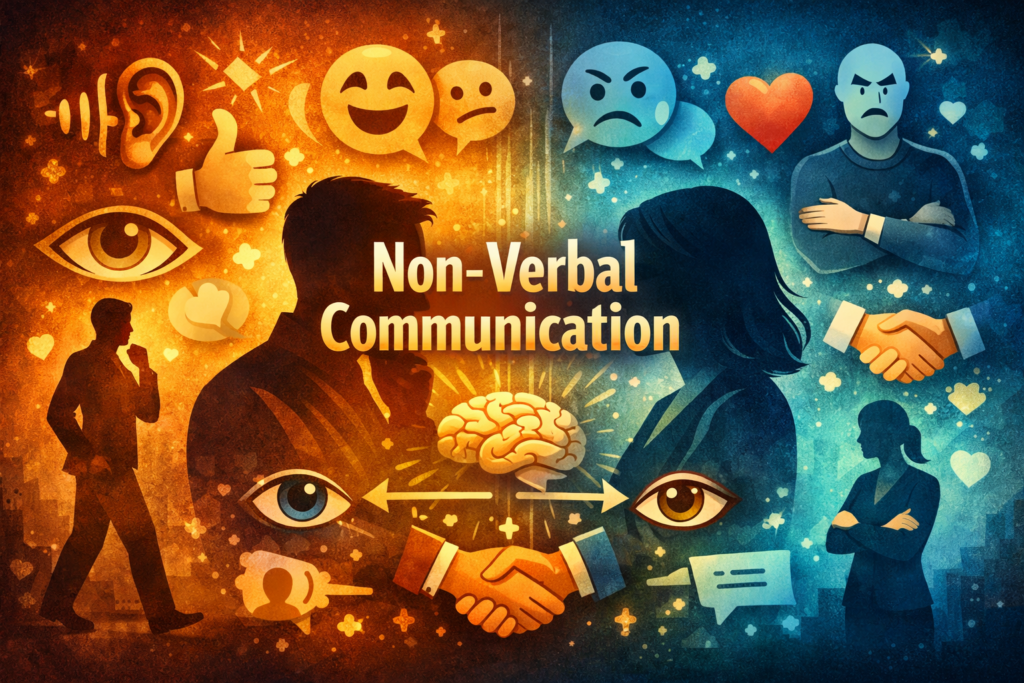
The PowThe Power of Non-Verbal Communication: How Body Language Builds Trust and Emotional Connection
Non-verbal communication shapes how we connect, understand, and build trust with others. We talk with people on a daily basis, and most of our lives are spent listening and speaking. However, there is much more to communication than words alone. Non-verbal communication—including body language, facial expressions, tone, and posture—often reveals our true emotions and intentions more clearly than spoken language.
The way a person speaks, their tone, pitch, and facial expressions all matter deeply. These subtle cues influence how others perceive us, often without conscious awareness. Non-verbal communication is a powerful tool used by successful individuals to build trust, emotional safety, and connection.
So are you excited to learn how to strengthen your non-verbal communication skills? Keep reading.
Why Non-Verbal Communication Matters More Than Words
Communication skills can pave the road to success, whether in professional environments or personal relationships. While the words coming out of your mouth hold importance, non-verbal communication often carries the emotional truth behind those words.
Your body language communication—including posture, facial expressions, and tone—has a profound impact on the person you are speaking with. Even when you are silent, you continue communicating through non-verbal cues.
Sometimes, words and body language communicate different messages. For example, you may verbally decline something while your posture or facial expression reveals hesitation or desire. This is why people instinctively trust non-verbal communication signals when trying to understand emotional truth.
How Body Language and Non-Verbal Communication Build Trust
In simple terms, non-verbal communication includes cues that we use instinctively. These include posture, gestures, tone, eye contact, and facial expressions. Most of these signals happen unconsciously.
These non-verbal cues are essential in building emotional connection and trust. They communicate openness, safety, confidence, and authenticity. Others often respond more to your body language communication than your words.
People also unconsciously mirror one another’s non-verbal communication. When your body language is calm and grounded, others often feel more comfortable and receptive. This strengthens emotional connection and trust naturally.
However, when emotions are unbalanced, your body language may unintentionally communicate tension, anxiety, or discomfort. Increasing awareness of non-verbal communication allows you to build healthier and more secure relationships.
Common Types of Non-Verbal Communication and Body Language
There are many forms of non-verbal communication, each playing a powerful role in how others perceive and respond to you.
Facial Expressions and Emotional Non-Verbal Communication
Facial expressions are universal forms of non-verbal communication. Emotions such as happiness, sadness, anger, and surprise are understood across cultures. Your face often communicates emotional truth instantly.
Posture and Body Language Communication
Your posture communicates confidence, insecurity, openness, or defensiveness. People often form impressions of your emotional state simply by observing how you carry yourself.
Eye Contact in Non-Verbal Communication
Eye contact is one of the most powerful non-verbal communication tools. It communicates presence, attention, sincerity, and confidence. Avoiding eye contact may communicate discomfort or emotional withdrawal.
Gestures as Non-Verbal Communication Signals
Gestures strengthen communication by reinforcing emotional meaning. Hand movements, positioning, and physical expression help communicate clarity and emotional emphasis.
Touch and Personal Space in Body Language Communication
Touch communicates reassurance, warmth, and emotional connection. Respecting personal space is equally important, as invading someone’s space can create discomfort even without words.
Tone of Voice as Non-Verbal Emotional Communication
Tone communicates emotional intention. The same words can convey compassion, frustration, sarcasm, or indifference depending entirely on tone.
How Emotional Intelligence Strengthens Non-Verbal Communication Skills
Emotional intelligence is the foundation of effective non-verbal communication. It begins with awareness of your own emotions.
When you understand your emotional state, you gain control over how those emotions influence your body language communication. This allows you to communicate more clearly, confidently, and authentically.
Emotional intelligence also improves your ability to read non-verbal communication in others. You begin to notice subtle signals in posture, tone, and expression. This strengthens empathy and emotional understanding.
Suppressing difficult emotions does not eliminate them. Instead, they often appear through non-verbal communication signals. Emotional awareness allows you to align your internal emotional experience with your external communication.
How to Improve Your Non-Verbal Communication and Body Language Skills
Non-verbal communication skills require patience, awareness, and intentional practice. With effort and consistency, you can strengthen these skills and improve your relationships and emotional presence.
1. Be Calm and Present in Your Non-Verbal Communication
When stressful situations arise, remaining calm helps regulate your body language communication. Emotional balance prevents sending unintended signals of stress or discomfort.
2. Develop Emotional Awareness to Improve Non-Verbal Communication
Understanding your emotions allows you to regulate your non-verbal communication more effectively. Emotional awareness strengthens your ability to communicate authentically.
3. Become More Observant of Body Language and Non-Verbal Cues
Pay attention to posture, tone, facial expressions, and gestures. Observing non-verbal communication improves emotional understanding and connection.
4. Practice Authentic and Confident Body Language Communication
Authenticity strengthens non-verbal communication naturally. When your internal emotions align with your external signals, you build trust and emotional safety.
Developing Authentic Presence Through Non-Verbal Communication Awareness
There are many ways to improve non-verbal communication, including self-reflection, learning, and intentional practice. However, true growth begins with awareness of yourself.
Confidence, emotional awareness, and presence strengthen your non-verbal communication skills. While you cannot control every signal, increasing awareness allows you to communicate more intentionally.
Non-verbal communication reflects your authentic emotional state. By strengthening your awareness and emotional intelligence, you build deeper trust, stronger relationships, and more meaningful human connection.
Lets keep the conversation going, so reach out to further explore your thoughts. https://revivethrivecounseling.com/contact/
Here is another perspective about non-verbal communication from David Matsumoto, Ph.D. while on a podcast for the APA. https://www.apa.org/news/podcasts/speaking-of-psychology/nonverbal-communication