
What Is Mindfulness?
Mindfulness is a state of active, open attention to the present. This state is described as observing one’s thoughts and feelings without judging them as good or bad.
Understanding Mindfulness
To live mindfully is to live in the moment and reawaken oneself to the present, rather than dwelling on the past or anticipating the future. To be mindful is to observe and label thoughts, feelings, and sensations in the body in an objective manner. Mindfulness can therefore be a tool to avoid self-criticism and judgment while identifying and managing difficult emotions.
Where Mindfulness Comes From
Mindfulness is rooted in Buddhist and Hindu teachings. Buddhism includes a journey toward enlightenment, and the concept of sati—which encompasses attention, awareness, and being present—is considered the first step toward enlightenment. The term was translated from the ancient language Pali into what we now call “mindfulness.”
The emergence of mindfulness in Western culture can be attributed to Jon Kabat-Zinn. Kabat-Zinn studied mindfulness under several Buddhist teachers, including Philip Kapleau and Thich Nhat Hanh. As a professor at the University of Massachusetts Medical School in the late 1970s, Kabat-Zinn developed a program called Mindfulness-Based Stress Reduction (MBSR) to treat chronic pain. He discovered that patients often tried to avoid pain, but that avoidance led to deeper distress. Practicing mindfulness proved to be a more effective approach.
As mindfulness gained traction in mainstream science and medicine, it became a pivotal therapeutic technique and was integrated into Mindfulness-Based Cognitive Therapy (MBCT), Dialectical Behavior Therapy (DBT), and Acceptance and Commitment Therapy (ACT), among others.
The Core Elements of Mindfulness
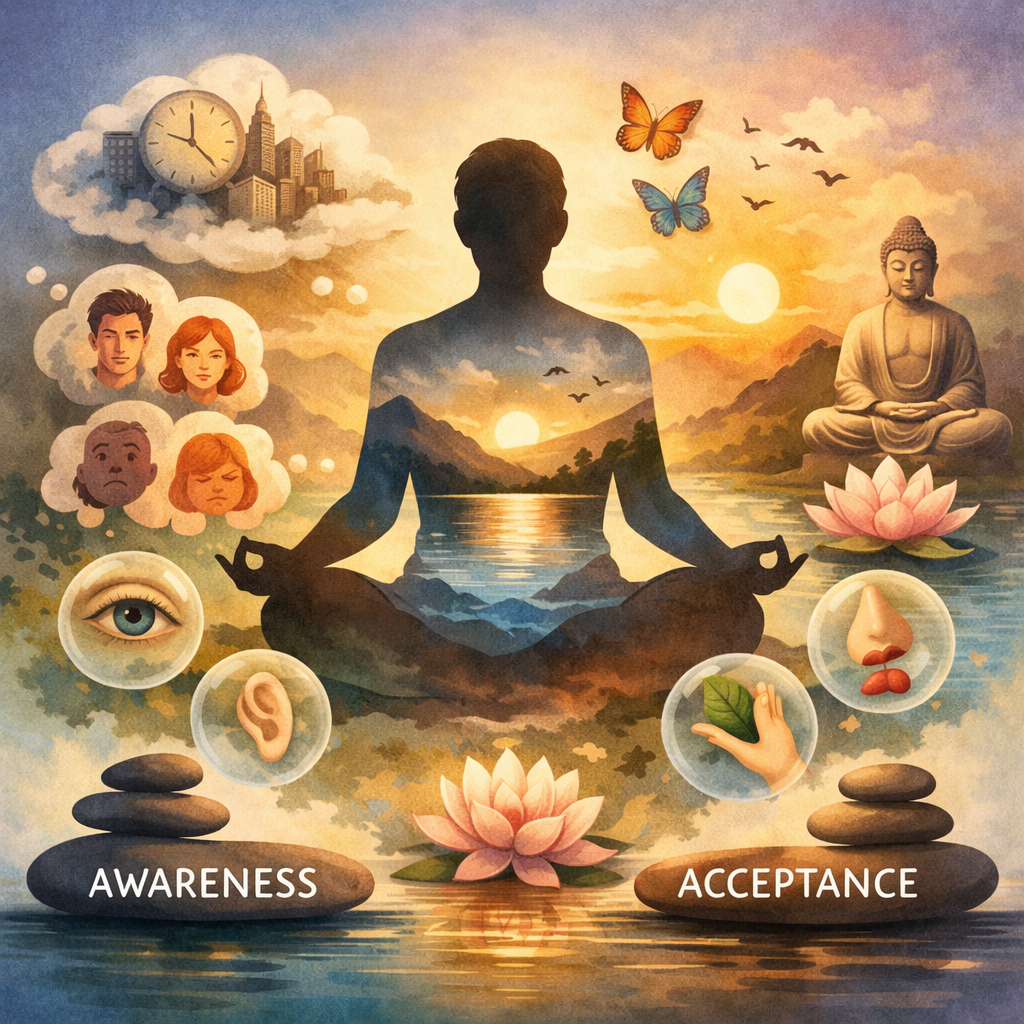
Mindfulness encompasses two key ingredients: awareness and acceptance.
Awareness
Awareness is the knowledge and ability to focus attention on one’s inner processes and experiences, such as the present moment.
Acceptance
Acceptance is the ability to observe and allow experiences—rather than judge or avoid them—including thoughts, emotions, and bodily sensations.
What Is the Purpose of Mindfulness?
The goal of mindfulness is to cultivate perspective on one’s consciousness and identity, which can bring greater peace both mentally and relationally. Mindfulness may also be used in mindfulness-based therapies to address stress, anxiety, or pain, or simply to become more relaxed and grounded.
Practicing Mindfulness
A person’s experience of time is subjective and heavily influenced by emotional state. Fears and insecurities related to the past or future can make it difficult to fully appreciate the present. The key is learning how to pay attention.
Mindfulness can take place through formal meditation sessions or in smaller moments throughout the day. To cultivate mindfulness, begin by sitting down and taking deep breaths. Focus on each breath and the sensations of the moment—such as sounds, scents, temperature, and the feeling of air moving in and out of the body.
Shift your attention to your thoughts and emotions. Allow each thought to exist without judging it or assigning negativity to it. Sit with those thoughts. This experience may evoke strong emotional reactions, which can become opportunities to address or resolve underlying challenges.
How Do I Practice Mindfulness?
To cultivate awareness, observe your thoughts and emotions and explore why certain ideas may be surfacing. To cultivate acceptance, avoid judging or pushing away unpleasant thoughts. Emotions are natural, and everyone experiences them. Acknowledging them can help you better understand yourself and move forward.
How Can I Be More Mindful in Daily Life?
Mindfulness can help bring you into the present moment throughout the day. As you wake up, focus on your breathing and notice how your body gradually becomes energized. You can incorporate brief meditation into your workday, perhaps during a lunch break, and practice appreciating the experience of eating during meals.
The 5 Senses Mindfulness Exercise
Sometimes we feel caught in a current of water, unable to reach solid ground. This exercise is a simple way to ground yourself and feel more centered during difficult moments.
You can practice this exercise anywhere—at home, on vacation, on a busy street, or in nature. All you need is about five minutes.
Step 1: Ground the Body
Sit quietly and tune into your body. Take slow, deep breaths, noticing the air moving through your nose and mouth.
Step 2: Engage the Senses
You may choose to focus on all five senses or just one.
Sight:
Notice colors, light, textures, and movement around you. Observe details you may not have noticed before.
Sound:
Close your eyes and notice sounds as they come and go—music, nature, or ambient noise—without attaching meaning to them.
Smell:
Notice scents in your environment. Mindfully breathe in aromas such as food, flowers, or familiar household smells.
Taste:
Slowly taste a small piece of food or a sip of a drink. Notice flavor, texture, and intensity without judgment.
Touch:
Notice physical sensations—your feet on the floor, air on your skin, textures, temperature, or the feeling of gentle movement.
When finished, take a few deep breaths and acknowledge your body and its ability to experience the world through the senses.
The Benefits of Mindfulness
Mindfulness is frequently used in meditation and therapy. Benefits include reduced stress, decreased rumination, and protection against depression and anxiety. Research also suggests mindfulness can help people cope with rejection and social isolation.
Does Mindfulness Really Work?
Review studies indicate that mindfulness-based interventions can help reduce anxiety, depression, and pain. To a lesser extent, mindfulness may also alleviate stress and improve overall quality of life.
How Does Mindfulness Help Relieve Anxiety?
Mindfulness fosters awareness and acceptance, helping individuals understand and cope with uncomfortable emotions. By focusing on breathing, engaging the five senses, and practicing self-compassion, people can gain greater emotional control and relief.
Questions for Reflection
- How can you incorporate mindfulness into your daily routine?
- How will you practice mindfulness?
- What do you hope to achieve through mindfulness?
I look forward to hearing your insights, https://revivethrivecounseling.com/contact/
The Greater Good Science Center provides additional evidenced-based mindfulness research. Check them out, https://greatergood.berkeley.edu/