
Finding Balance in Life Without Becoming Emotionally Drained
Finding balance in life can feel incredibly difficult when work, home responsibilities, relationships, and personal needs all compete for your attention at the same time. Many people tell me they constantly feel emotionally drained trying to manage everything while still attempting to remain present for themselves and the people they care about.
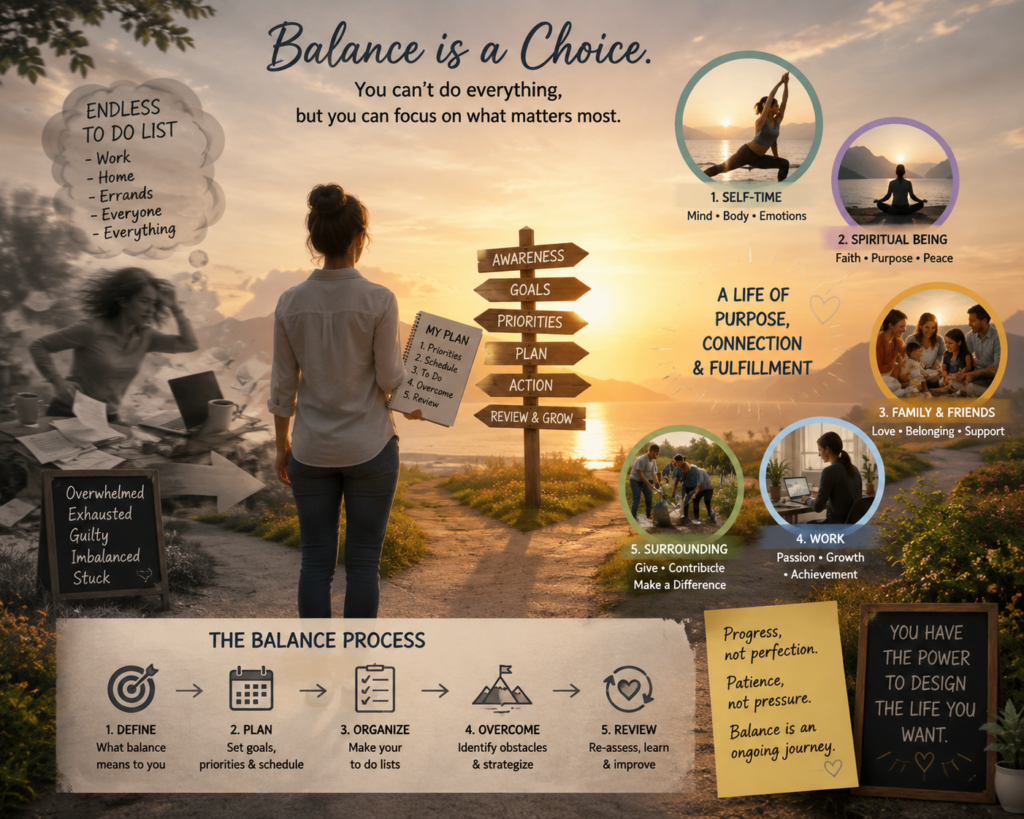
Many create a “to do” list that feels endless and continues to grow. I often hear comments such as:
“I want to come home and spend quality time with my partner and kids, but there is so much to do.”
“I want to relax and just be present, but I can’t. Everyone needs me.”
“He says he spends time with us, but he is always on his phone.”
“I cannot take one more thing on myself. I work too many hours every week.”
Most of these comments reflect emotional exhaustion, overwhelm, and a deep desire for balance.
We try to juggle responsibilities, duties, expectations, desires, and obligations while still attempting to remain emotionally available for ourselves and our loved ones. Over time, this constant pursuit can leave us frustrated, disconnected, overwhelmed, and mentally exhausted.
Why Finding Balance in Life Feels So Difficult
Many people approach balance as though it is a final destination where everything will eventually feel perfectly organized and under control. In reality, balance is an ongoing process that constantly changes depending on life circumstances, stressors, responsibilities, and emotional needs.
At times, work requires more energy. Other times, relationships, self-care, healing, parenting, or emotional well-being need greater attention.
The difficulty often comes from trying to give everything equal energy at the same time.
This can lead to:
- Burnout
- Emotional exhaustion
- Increased stress and anxiety
- Mental fatigue
- Guilt
- Irritability
- Feeling disconnected from yourself or others
- Difficulty being emotionally present
Balance is not perfection. Balance is awareness, flexibility, intentionality, and re-adjustment.
The Five Areas That Influence Balance in Life
There are several areas of life where people commonly struggle to maintain balance. Each plays an important role in emotional and mental well-being.
Self-Time and Emotional Wellness
Self-time involves caring for both your physical and emotional health. This may include:
- Exercise and movement
- Rest and sleep
- Relaxation
- Hobbies
- Therapy or emotional processing
- Mental health care
Many individuals prioritize everyone else while neglecting themselves. Over time, this creates emotional depletion, resentment, and exhaustion.
This is often where people begin feeling emotionally drained without fully understanding why.
Spirituality and Inner Connection
Spirituality does not necessarily mean religion. It may involve:
- Meditation
- Journaling
- Prayer or faith
- Yoga
- Mindfulness
- Nature
- Creativity and art
These activities help create grounding, reflection, emotional clarity, and inner peace.
Family, Relationships, and Emotional Presence
Human beings naturally seek connection, belonging, and emotional closeness.
Healthy balance includes intentionally nurturing:
- Family relationships
- Friendships
- Emotional intimacy
- Quality time
- Communication
- Presence
Sometimes individuals are physically present but emotionally distracted due to stress, technology, overworking, or emotional burnout.
Work, Purpose, and Emotional Balance
Work can provide:
- Structure
- Purpose
- Accomplishment
- Identity
- Financial stability
- Empowerment
However, when work becomes excessive or emotionally consuming, imbalance often develops quickly.
Many emotionally drained individuals struggle with boundaries, overworking, perfectionism, or difficulty disconnecting mentally from responsibilities.
Community, Contribution, and Fulfillment
Many individuals also seek fulfillment through contributing to something larger than themselves. This may involve:
- Helping others
- Volunteering
- Advocacy
- Mentorship
- Community involvement
Feeling connected to others and contributing meaningfully can improve emotional wellness and overall fulfillment.
How to Find Balance in Life Without Feeling Emotionally Drained
Finding balance in life requires patience, flexibility, awareness, and consistent reassessment. It is not about controlling every aspect of life perfectly. It is about learning how to respond more intentionally to your needs and responsibilities. Self- Advocacy is an empowering approach to be leveraged, https://revivethrivecounseling.com/self-advocacy-why-you-struggle-to-speak-up-and-how-to-change-it/
Define What Balance in Life Means to You
Balance looks different for everyone.
Take time to identify:
- What currently feels overwhelming
- What areas of life feel neglected
- What matters most to you
- Which areas require more attention
Your version of balance should reflect your emotional needs, priorities, and values — not someone else’s expectations.
Create Weekly Priorities and Time Blocks
Once a week, review your priorities and intentionally structure your time.
This may include scheduling:
- Family time
- Work responsibilities
- Exercise
- Relaxation
- Spiritual practices
- Social activities
- Personal downtime
Creating intentional “blocks” of time often reduces emotional chaos and increases mental clarity.
Organize Responsibilities to Reduce Emotional Exhaustion
Instead of carrying one overwhelming mental list, separate responsibilities into categories such as:
- Work
- Home
- Family
- Self-care
- Spirituality
- Social life
This helps responsibilities feel more manageable and less emotionally overwhelming.
Identify Obstacles That Disrupt Your Life Balance
Many individuals know what they need to do but continue struggling with obstacles such as:
- Poor boundaries
- People pleasing
- Guilt
- Perfectionism
- Emotional exhaustion
- Fear of disappointing others
- Technology distractions
- Difficulty saying “no”
Ask yourself:
- Can this wait?
- Can I delegate this?
- Am I overcommitting myself?
- What boundaries need strengthening?
Re-Assess and Adjust Your Balance Weekly
Balance requires continuous adjustment.
At the end of each week ask yourself:
- What went well?
- What drained me emotionally?
- What did I avoid?
- What needs more attention next week?
- What can I improve without criticizing myself?
Growth comes through awareness and flexibility, not perfection.
Finding Emotional Balance Instead of Perfection
The process of finding balance in life takes patience, practice, self-awareness, and compassion.
Some weeks will feel more balanced than others. Setbacks and emotional fatigue are normal parts of the process.
Allow room for:
- Imperfection
- Rest
- Spontaneity
- Re-evaluation
- Emotional processing
- Flexibility
Over time, intentional changes can help you feel:
- More emotionally grounded
- Less overwhelmed
- More productive
- More connected to yourself and others
- More appreciative of what matters most
Check out some recommendations from the American Psychological Association, https://www.apa.org/topics/stress/body
Reflection Questions About Finding Balance in Life
- How do you personally define balance?
- What areas of your life currently need more attention?
- What contributes most to your emotional exhaustion?
- What boundaries may need strengthening?
- What can you realistically adjust this week?
- What did you learn from your recent experiences?
As always, I am curious to explore life with you.