
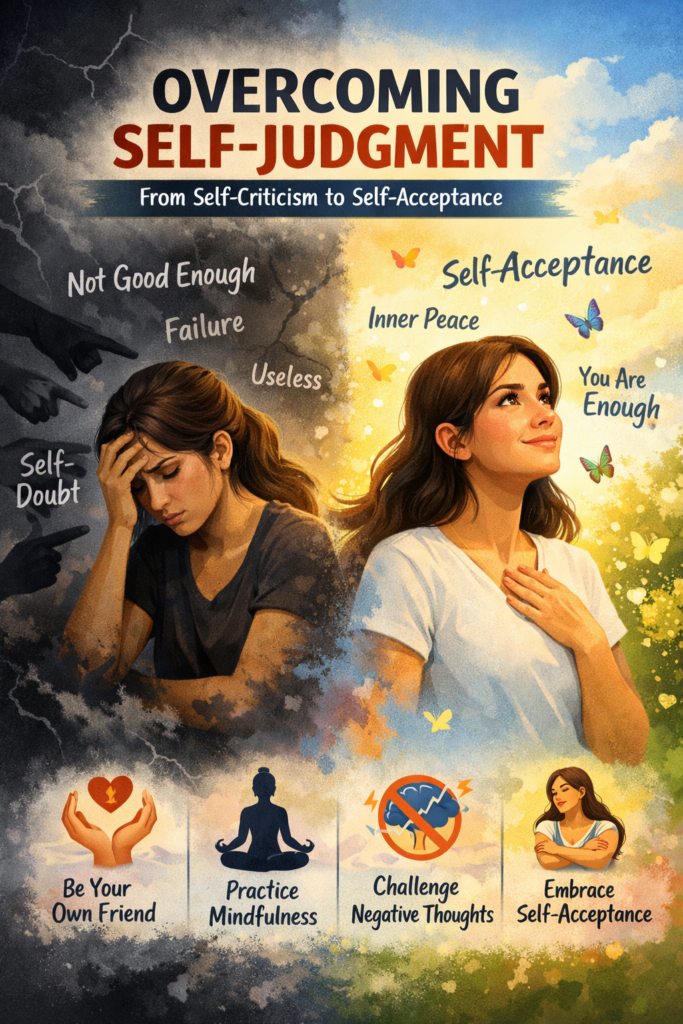
Overcoming Self-Judgment: How Self-Criticism Affects Mental Health and Ways to Heal
Overcoming self-judgment can feel incredibly difficult, especially when anxiety and self-criticism seem to be constant companions. If you are struggling with anxiety due to self-judgment and want to break free from it, I’ve got you. In this article, I discuss how self-judgment affects mental health and share ways to cope with it through mindfulness and self-acceptance.
We live in a judgmental world, and that is simply a reality. Scroll through social media or turn on the television, and you’ll quickly notice people’s opinions about world events, politics, climate change, and nearly everything else. We all have judgmental thoughts throughout the day, often without even realizing it. Based on our beliefs and values, we make judgments about what is good or bad, right or wrong, and what should or shouldn’t be happening.
We judge others based on how they look, speak, or act—and often, we judge ourselves even more harshly. Our appearance, our personality, our abilities, and our perceived failures can become targets of relentless self-criticism. Over time, this internal judgment can deeply impact emotional well-being.
Causes of Self-Judgment and Why Overcoming Self-Judgment Is Difficult
Self-judgment develops for many reasons. For some, it is rooted in difficult life experiences that become internalized over time as negative beliefs about oneself. This can include experiences of criticism, rejection, trauma, or repeated failure. When these experiences occur early in life, they may become part of what psychologists refer to as egocentric functioning—a way of understanding the world where everything feels personal and self-referential.
Children, in particular, often lack the ability to separate external events from their sense of self. While this way of thinking may begin in childhood, it can continue into adulthood, especially during times of emotional distress. Self-judgment is strongly linked to anxiety, depression, and low self-esteem. When people experience repeated setbacks or harsh life events, they may begin to view themselves as flawed or inadequate, reinforcing cycles of shame and self-criticism.
How Self-Judgment Affects Mental Health and Emotional Well-Being
Everyone experiences stress, loss, and emotional pain at some point in life. Some challenges arise from mistakes, while others are unavoidable. Regardless of the cause, the way we judge ourselves during these experiences plays a significant role in how much anxiety or depression we feel.
When self-judgment takes over, thoughts about who is right or wrong, what should have happened, or how things should feel can intensify emotional distress. Research published in Mindfulness Magazine has shown that individuals who practice non-judgmental awareness experience lower levels of anxiety and depression. The study examined mindfulness components such as observing thoughts and emotions, acting with awareness, and responding without judgment or reactivity.
One of the strongest predictors of psychological well-being was non-judgmental thinking paired with awareness. This suggests that overcoming self-judgment does not require changing emotions or forcing positivity, but rather learning how to observe experiences without attaching harsh evaluations to them.
Being non-judgmental does not mean denying pain or pretending everything is okay. Instead, it involves acknowledging thoughts and emotions as they are—without adding labels of good, bad, right, or wrong. This shift can open the door to a more compassionate understanding of oneself.
Overcoming Self-Judgment Through Self-Acceptance
Self-acceptance means allowing all aspects of yourself to exist without rejection. It does not require ignoring weaknesses or avoiding growth. Instead, self-acceptance allows you to recognize limitations without letting them define your worth.
When you practice self-acceptance, life often feels less like a constant struggle against reality. Overcoming self-judgment creates space for personal growth because energy is no longer spent suppressing disliked parts of yourself. Accepting both strengths and imperfections allows meaningful change to occur from a place of compassion rather than shame.
Self-acceptance also opens the door to possibilities that may have felt inaccessible when self-criticism dominated your internal dialogue.
Ways to Develop Self-Acceptance:
- Believe in your uniqueness and understand that your value is not determined by others’ opinions
- Embrace yourself as you are while continuing to grow and improve
- Practice positive self-talk and intentionally acknowledge your efforts
- Treat yourself with the same compassion you offer friends and loved ones
- Step out of habitual judgment and take time to validate your experiences
Ways to Overcome Self-Judgment Using Mindfulness and Compassion
Overcoming self-judgment takes practice, patience, and awareness. Below are several strategies that can help shift the relationship you have with your inner critic.
Take Judgments as Lessons
When you notice thoughts like “I’m not smart enough” or “I’m not good enough,” pause and explore where the judgment comes from. Often, these thoughts are rooted in fear or a desire for external validation rather than truth. Understanding their origin can reduce their emotional grip.
Be Your Own Friend
When self-criticism arises, imagine speaking to your closest friend. Would you say the same harsh things to them? Practicing self-compassion means learning to speak to yourself with kindness and honesty rather than punishment.
Practice Mindfulness
Mindfulness involves staying present with emotions without judgment or the urge to change them. By identifying emotions as they arise—such as sadness, anger, or fear—you create space between the emotion and your reaction. This awareness reduces impulsive responses and emotional overwhelm.
Think of Your Younger Self
Reflect on your childhood experiences and consider where self-judgment may have originated. If compassion feels difficult for your present self, direct it toward your younger self. Ask what they needed then—and how you can offer that care now.
Don’t Let Negative Thoughts Turn Into Action
Negative emotions gain power when they immediately lead to action. When strong feelings arise, pause. Sit, breathe, journal, or meditate before responding. Acting impulsively often reinforces self-judgment rather than relieving it.
Final Thoughts on Overcoming Self-Judgment
Overcoming self-judgment is not about eliminating difficult thoughts or emotions—it is about changing how you relate to them. By practicing mindfulness, self-acceptance, and compassion, it becomes possible to loosen the grip of self-criticism and reduce symptoms of anxiety and depression.
If stress, anxiety, or emotional exhaustion feel overwhelming, learning to observe experiences without judgment may offer a powerful shift. Sometimes, that shift begins simply by allowing yourself to be human.
I’m ready when you are to get started, click here to get started: https://revivethrivecounseling.com/contact/
Enjoy an analytical perspective to self-judgment here: https://youtu.be/oXcoLgeg2S8?si=KYwupKsWwE_8l7P6