
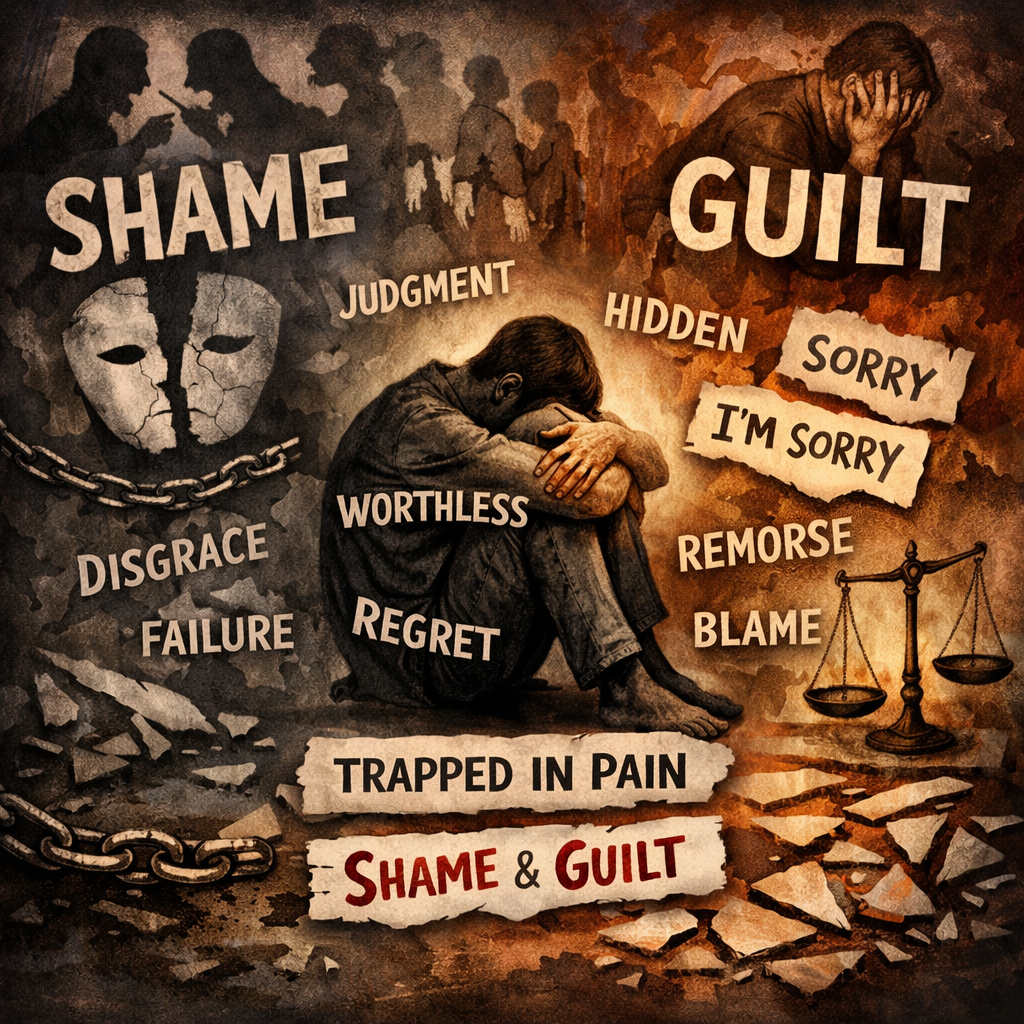
The Emotional Cycle of Shame Guilt
Shame, guilt, anxiety, and anger are some of the most powerful emotions shaping how we see ourselves and the world. Many people carry these emotional burdens for years without realizing how deeply they affect identity, relationships, and mental health.
Shame changes people from the inside out. It alters how individuals see themselves, how they relate to others, and how much control they feel they have over their lives. Over time, it can even influence personality.
Shame exists across all races, ethnicities, and cultural backgrounds. In some cultures, it carries a heavy personal and family cost. Through my work with many individuals, I have seen both shared and unique paths that lead people into shame.
How Shame Becomes Internalized
People hold different definitions of shame, and this shapes how deeply it is felt. According to the APA Dictionary of Psychology (2020), shame is “a highly unpleasant self-conscious emotion arising from the sense of there being something dishonorable, immodest, or indecorous in one’s own conduct or circumstances.”
This definition gives us a baseline for understanding shame. Yet people arrive at shame in many ways. Some experiences are direct. Others are subtle. No matter how it forms, shame rarely feels helpful or healing.
People feel shame deep inside. That depth makes it difficult to release. Many people experience shame after believing they violated their own values. Sometimes this belief is grounded. Other times it is not.
This is where guilt often enters.
Why Shame and Guilt Feel So Persistent
Many people carry shame for reasons that feel real but may not be grounded. When someone questions those reasons, their mind often responds with rationalizations.
Thoughts like “I deserve to feel ashamed” take over. People begin to protect their shame as if it must exist. Over time, shame becomes part of their identity.
This often happens when someone’s definition of shame is too broad or too harsh. When that happens, people feel shame even in situations where it does not belong.
How Shame, Guilt, Anxiety, and Anger Affect Daily Life
Shame must be questioned, just like any other emotional belief. If it is not, people begin to live by its consequences.
Unexamined shame shapes how people show up at work, at home, in relationships, and in social spaces. It influences self-talk, boundaries, and confidence.
When people allow themselves to look at shame with curiosity, something shifts. They gain a fuller and more accurate view of who they really are.
This is one of the most important steps toward emotional freedom.
Understanding the Difference Between Shame and Guilt
Guilt often accompanies shame, but they are not the same. Shame attacks identity. Guilt focuses on actions.
Guilt can come from almost any situation. Some guilt has a healthy foundation. Other guilt comes from unrealistic standards or distorted self-judgment.
When people carry irrational guilt, they may feel responsible for things they were never meant to control. That guilt can last for years if it remains unexamined.
How Guilt Is Formed and Maintained
The APA defines guilt as “a self-conscious emotion characterized by a painful appraisal of having done (or thought) something that is wrong.” Unlike shame, guilt also includes fear of exposure and judgment.
People often decide they are guilty based on how they interpret their own actions. When someone holds a strict or overly sensitive standard, guilt becomes easier to trigger.
In many cases, the person is the only one judging themselves.
How Fear of Judgment Sustains Guilt
Fear of exposure keeps guilt alive. People worry about being seen, criticized, or rejected.
To avoid this, they may change how they speak, act, or even think. Some people hide parts of themselves. Others lie. Many grow exhausted from trying to protect themselves from imagined consequences.
Relief begins when people explore whether their guilt is truly grounded.
Rational vs. Irrational Guilt
Only the person carrying the guilt can decide whether it fits. They created it, and they must be the one to question it.
Some guilt reflects real responsibility. Other guilt reflects emotional conditioning. Learning the difference is part of healing.
How to Begin Releasing Shame Guilt Anxiety Anger
Instead of labeling guilt automatically, reflect on it. Look at it from different angles. Ask whether it is rational or inherited.
This process brings clarity. It also weakens emotional patterns that no longer serve you.
Every form of shame and guilt deserves to be questioned.
When Professional Support Can Help
Many people carry emotional burdens that were never theirs to hold. Challenging guilt helps reveal what truly belongs to you and what does not.
When guilt is real, it can be worked through. When it is not, it can be released.
If these emotions feel overwhelming, tele-health counseling through Revive & Thrive Counseling can help: https://revivethrivecounseling.com/contact/
Still curious about shame and guilt? You can explore another perspective here: https://youtu.be/k06nRCVvcRY?si=QBW1za_u2AJhm7S-