
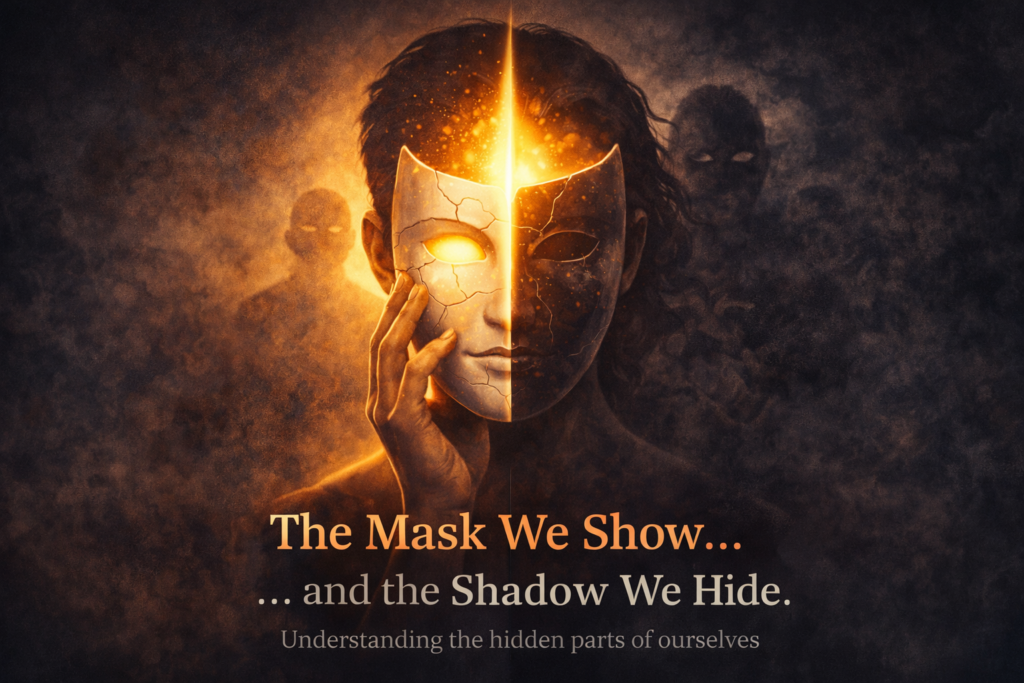
Mask and Shadow Psychology: Understanding the Hidden Self
Mask and shadow psychology explores an important question about human behavior: why do we show certain parts of ourselves to the world while hiding others?
Many people move through life wearing a psychological mask, presenting a version of themselves that feels safe or socially acceptable. At the same time, other thoughts, emotions, and traits remain hidden in what psychologist Carl Jung described as the shadow.
Understanding mask and shadow psychology can help us better understand our behaviors, emotional patterns, and personal growth.
The Meaning of Mask and Shadow Psychology
Mask and shadow psychology comes from the ideas of Swiss psychiatrist Carl Jung, who proposed that our personality contains both conscious and unconscious elements.
The mask represents the part of ourselves we intentionally show others. It includes behaviors that help us adapt socially and maintain acceptance within relationships or communities.
The shadow, on the other hand, represents aspects of ourselves that remain hidden from conscious awareness. These aspects may include emotions, desires, or traits we have learned to suppress.
Mask and shadow psychology suggests that both parts exist in every person.
The Psychological Mask We Present to the World
The psychological mask often develops as a way to navigate social expectations. From a young age, we learn which behaviors are rewarded and which ones may lead to rejection or criticism.
Because of this, people may develop masks such as:
- appearing confident while feeling insecure
- acting agreeable to avoid conflict
- presenting success while hiding self-doubt
- minimizing struggles or emotional pain
In many situations, the mask can be useful. It helps us function in professional environments and maintain social harmony.
However, when the mask becomes too rigid, it can distance us from understanding our authentic emotions.
The Hidden Shadow in Mask and Shadow Psychology
Within mask and shadow psychology, the shadow refers to the unconscious aspects of the personality that we tend to reject or ignore.
These aspects might include:
- anger
- shame
- fear
- jealousy
- vulnerability
- insecurity
Yet the shadow is not only negative. It can also contain hidden strengths, creativity, and potential that have not yet been acknowledged.
For example, someone who hides their assertiveness may struggle with boundaries, while someone who suppresses creativity may feel stuck in rigid patterns of thinking.
Understanding the shadow helps individuals become more aware of these hidden influences.
Why People Develop Psychological Masks
There are several reasons why individuals develop masks and hide parts of themselves in the shadow.
Some of the most common reasons include:
- fear of judgment
- fear of rejection
- past emotional experiences
- cultural expectations
- impostor syndrome
- low self-esteem
Over time, these experiences shape how we present ourselves to others.
Mask and shadow psychology helps explain why people may behave differently in public than they do privately.
The Emotional Cost of Hiding the Shadow
While the mask may help people feel protected, constantly hiding parts of ourselves can create emotional tension.
Some individuals may experience:
- feelings of disconnection from their authentic self
- difficulty expressing emotions
- anxiety about being “exposed”
- emotional exhaustion from maintaining appearances
When the gap between the mask and the shadow becomes too large, people may feel as though they are living a life that does not fully represent who they are.
This is why awareness of mask and shadow psychology can be valuable. Fear of being exposed or judged can also contribute to anxiety. If anxiety has been affecting you, you may find our article on understanding panic attacks and how to manage them helpful, https://revivethrivecounseling.com/panic-attacks-symptoms-causes-and-how-to-stop-them/
Integrating the Mask and the Shadow
The goal of understanding mask and shadow psychology is not to eliminate the mask entirely. Social adaptation is a normal part of life.
Instead, personal growth often involves gradually becoming aware of the shadow and integrating those hidden aspects into conscious awareness.
Some helpful ways to explore this include:
- journaling about emotional reactions
- noticing recurring relationship patterns
- reflecting on strong emotional triggers
- engaging in honest self-reflection
- speaking with a mental health professional
Through curiosity and awareness, people can develop a more balanced relationship with themselves. https://www.psychologytoday.com/us/blog/progress-notes/202004/get-to-know-your-shadow
Final Thoughts on Mask and Shadow Psychology
Mask and shadow psychology reminds us that every person contains both visible and hidden aspects of themselves.
The mask allows us to navigate the social world, while the shadow holds experiences and traits that remain outside of awareness.
Greater self-understanding comes not from rejecting the shadow, but from becoming curious about it.
When individuals begin exploring both the mask they show and the shadow they hide, they often discover deeper levels of self-awareness, authenticity, and emotional growth.
Thank you for taking time to learn more about you.